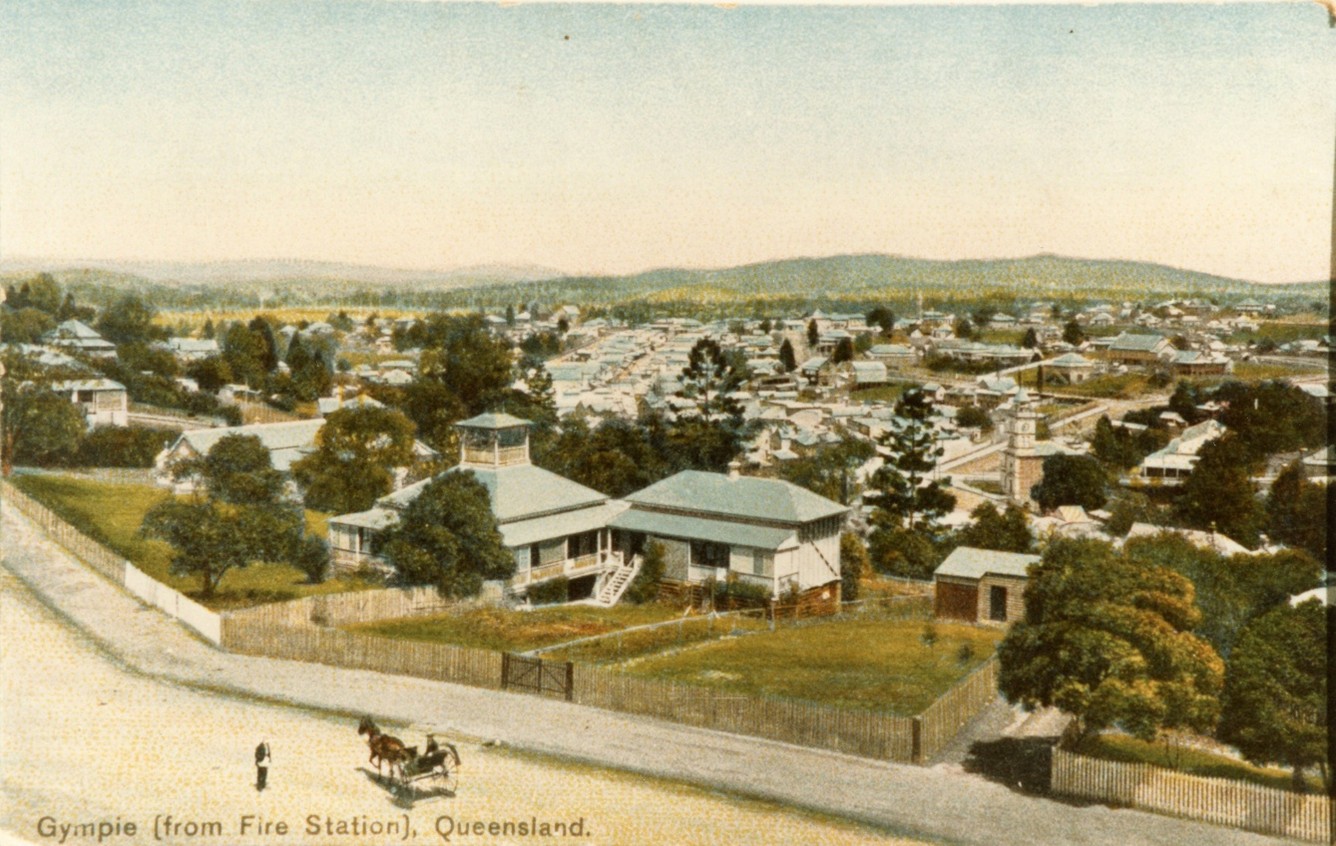
1 Church St, Gympie, ca1906. Source: Gympie Libraries Photograph Collection.
Built between 1880 and 1885, this home at number 1 Church Street was constructed predominantly from timber, no doubt taking advantage of the abundant supplies of timber products in and around Gympie at the time of construction.
This house was designed by well-known local architect Hugo Du Rietz who drew the plans for many other prominent buildings in Gympie, including Surface Hill Church (Atkinson, 2018). This house has many architectural features typical of the federation era style home. Houses of this era were built to be grander, larger homes with multiple rooms, which was an upgrade from the very basic miner’s cottage (House Histories, 2026). This house features a pyramid style roof, with OGEE gutters, a signature design feature of Hugo’s (Atkinson, 2018). An OGEE gutter refers to a veranda roof with a distinctive double curve—shaped like an elongated “S”. The term “ogee” comes from architecture and describes that flowing curve, which dips down and then rises again. This house also features beautiful ornate designs along the fascia board, adding to its historic appeal.
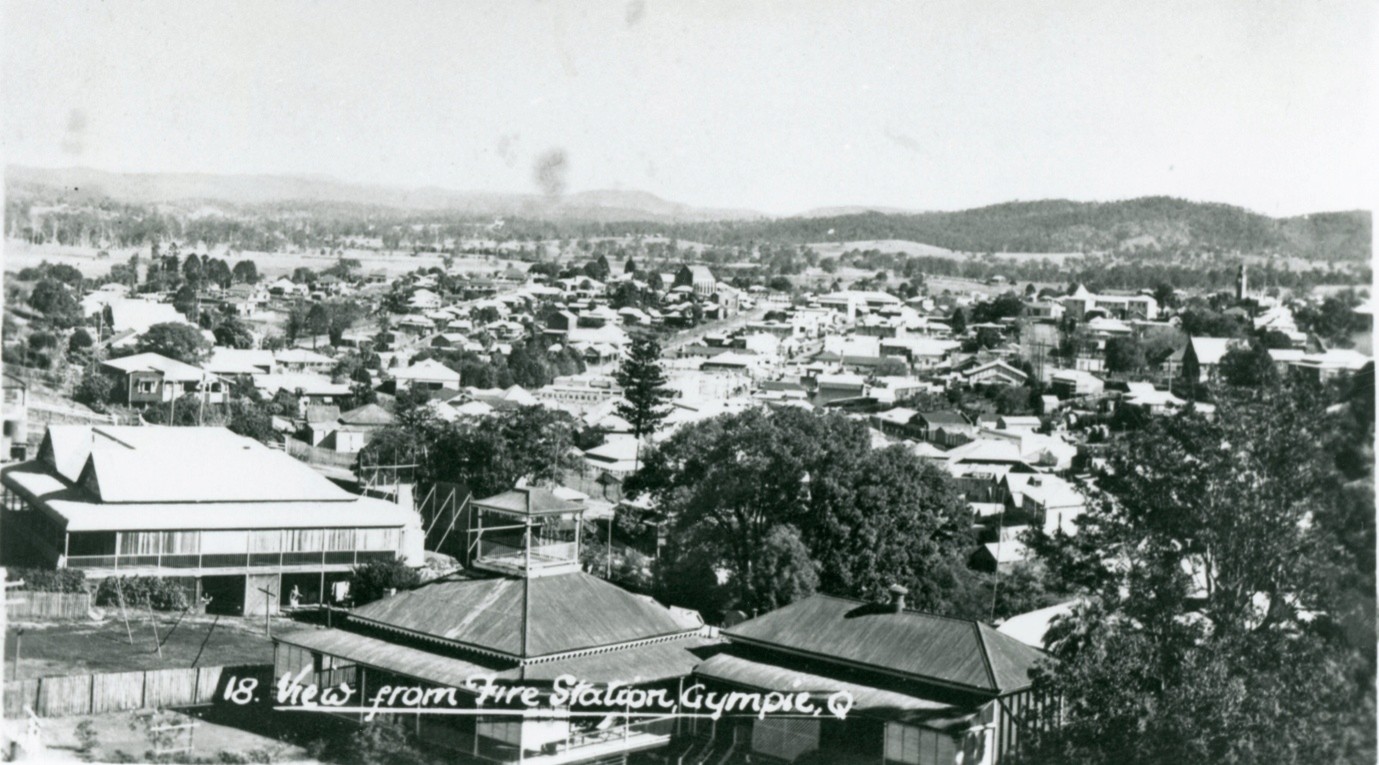
1 Church St, Gympie, ca1906. Source: Gympie Libraries Photograph Collection.
What sets this house apart from other houses in the Gympie area though, is the observation platform which was originally built on top of the roof (unfortunately it no longer exists as it was removed in November 1999). It is unknown why the observation tower was built; however, due to the location of the house in Gympie’s CBD, it would have provided a great view of the gold mining that was happening in town at the time.
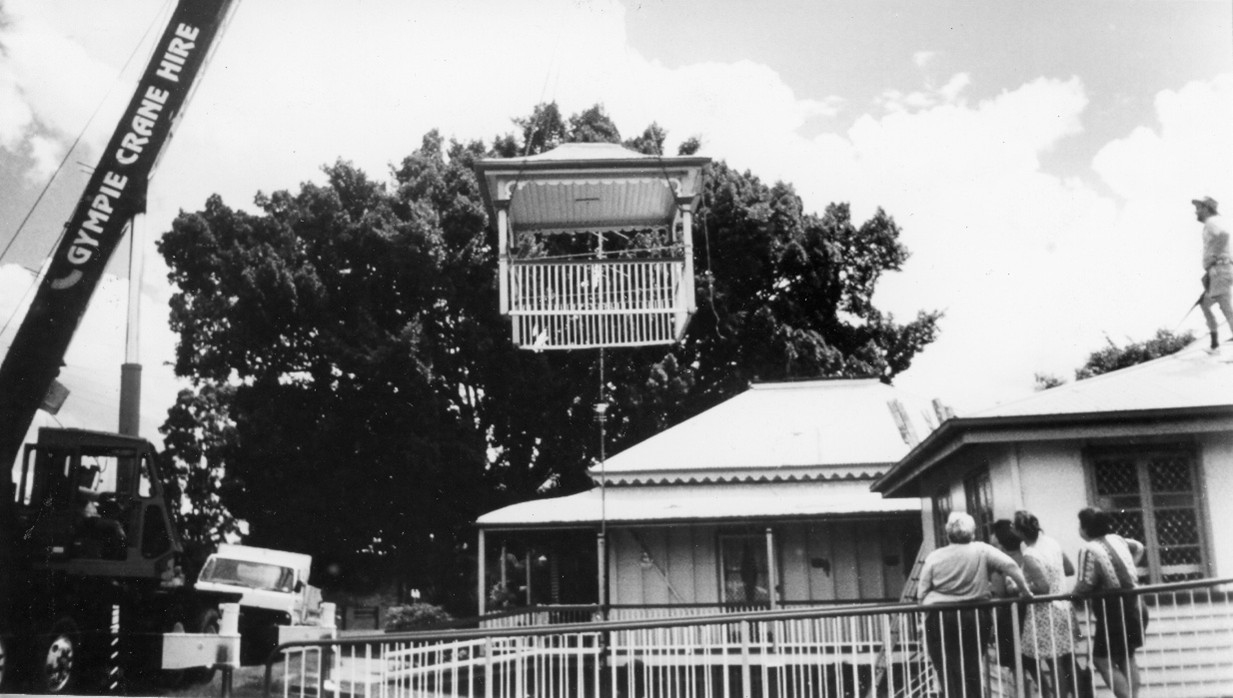
The observation tower being removed from 1 Church Street, Gympie in 1999. Source: Gympie Library Photograph Collection.
This house was originally owned by Mr William Edward Burbidge and was named “Wendouree” (Mulholland, 1983). Mr Burbidge was born in Ballarat, Victoria in 1859 (Gympie Family History Society, 2021). Having been born in a gold mining town, it’s not surprising that he came to Gympie in 1893 when he heard of the Gympie Gold Rush. At 34 years old, he established himself in the Gympie township as a gold assayer and analyst, melting and refining gold at the PC. Phoenix Mine (which was located where the Gympie Council John St depot is today).
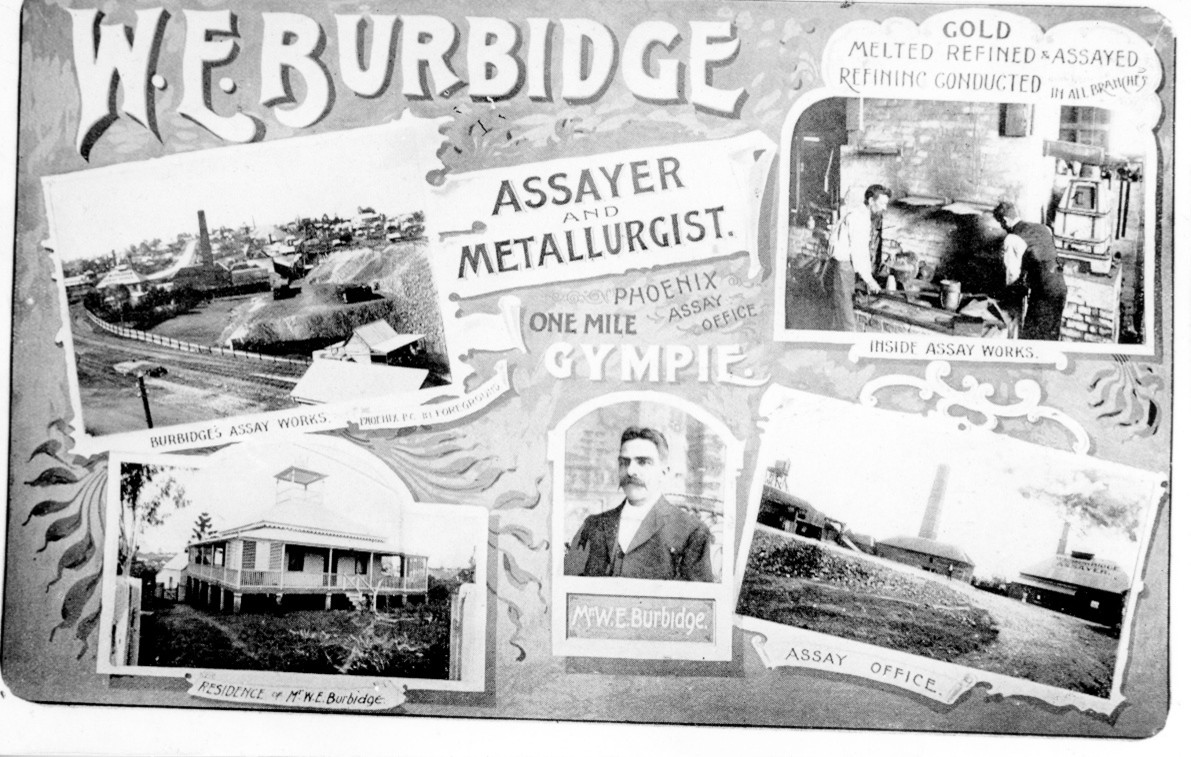
W.E. Burbidge postcard early1900s. Source: Gympie Library Photograph Collection.
In October 1903, William called upon Hugo Du Reitz to design extensions to his home on the eastern side. Impressively, William went on to become mayor of Gympie between 1909 and 1910. As well as this, Mr Burbidge also commissioned Hugo Du Rietz to design a brick retort house in Reef St, which was completed in 1902 (Atkinson, 2018).
The original house on Church Street stayed in the Burbidge family for over 40 years, with William’s sons and daughters taking over the house in the 1940s (Gympie Council Rates Books). The house is now owned by St Patrick’s Convent and is known as the Jesse Witham respite centre (Mulholland, 1983).
References:
Atkinson, L. (2018). Hugo du Rietz: Swedish noble, architect, farmer and a founding father of Gympie.
Gympie City Council. (1914-1955). Gympie City Council Rates Books.
Gympie Family History Society. (2021). William Edward Burbidge. Facebook. https://www.facebook.com/GympieFamilyHistorySocietyInc
House Histories. (2026). Queensland house designs, 1887-1920. https://www.househistories.org/qld-house-designs-1887-1920
Mulholland, W. (1983). The Town That Saved Queensland. National Trust of Queensland.

