
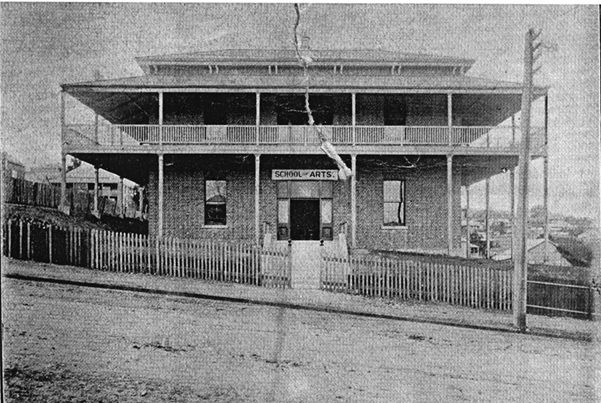
School of Arts building, year unknown.
Early History
The genesis of one of Gympie’s most iconic buildings can be traced back to 1870, when a group of community minded citizens decided the town needed a School of Arts. The idea originated from “the School of Arts movement” which swept England and Scotland in the 1820s (Webb & Pechey, 1995). Many people involved in hosting adult Sunday Schools, particularly members of the Methodist and Quaker church groups, believed it was necessary for the middle class to educate the masses. The idea gained a solid foothold in Australia when the North Brisbane School of Arts opened in 1849. Following this, many other towns embarked on similar projects, and by 1901, there were over 2000 School of Arts buildings in Australia and 181 in Queensland (Webb & Pechey, 1995).
It was in 1870 though, that Gympie came into the spotlight. A group of Gympie citizens submitted an application to the State Government for a School of Arts. Later that year, a portion of land was gazetted for the School of Arts at what is now 39 Nash Street, Gympie. It was only on the 21st of January 1871, however, that the idea was officially put forward in a public meeting (Webb & Pechey, 1995). Initially, the School of Arts was located at what is now 69 Mary Street, or what many locals would remember as Lyon’s newsagency or Patrick’s newsagency. This was mainly due to a lack of funding available at the time to establish a new building on Nash Street. At the Mary Street site, the School of Arts offered a small library and many classes teaching essential skills (Webb & Pechey, 1995). With the influence of gold mining in Gympie at the time, the School of Arts also adopted mining courses, which were an initiative of the School of Mines lobby group.
During the early 1900s, gold mining in Gympie was in full swing and so the interest in the School of Arts classes waned. Both the School of Arts and the School of Mines struggled financially during this period, relying on member subscription fees and small government grants (Webb & Pechey, 1995). This further prolonged the establishment of a new building.
Eventually, in March of 1904, the School of Arts committee requested local architect Hugo Du Rietz to provide a rough sketch for a new building (Atkinson, 2018). The committee also decided to ask the Premier for further financial assistance. About one month later, a costing was done for the new building. The new building was estimated to cost 1529 Australian pounds (which equates to approximately $280,000 in today’s money). On the 2nd of May 1904, the School of Arts decided to put the Mary Street property up for sale to help pay for the new building (Webb & Pechey, 1995). At the end of May, tenders were put out for the job of constructing the new building. Mr George Britton won the building contract and so he got to work. In February of 1905, the building was finally completed. It was officially opened to the public on the 28th of February 1905, 35 years after the first proposal to provide Gympie with a School of Arts.
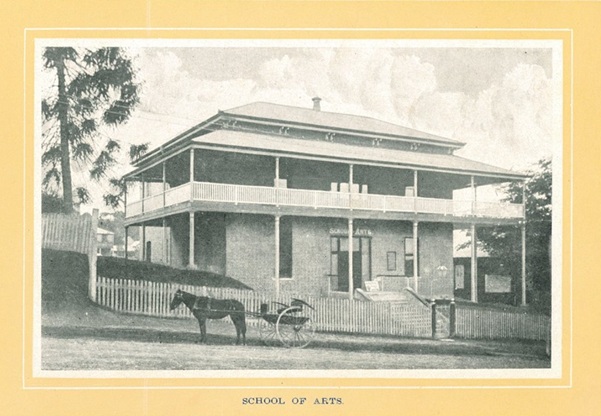
School of Arts building, early 1900s.
This magnificent two-story building, tastefully designed by Hugo Du Rietz, featured a brown brick façade with arched brick voussoirs over the windows (Atkinson, 2018). The pyramid style, unique double roof design drew the attention of keen onlookers to the symmetrical design of this building. The upper level featured a large verandah which ran across the front and halfway around the sides of the building. The centrally placed front double entry doors were made from cedar, in line with Hugo’s love for timber finishes (Atkinson, 2018). One of the most memorable features of his design though was the grand timber staircase with a decorative cedar balustrade which added to the beautiful historical character of this building (Atkinson, 2018).
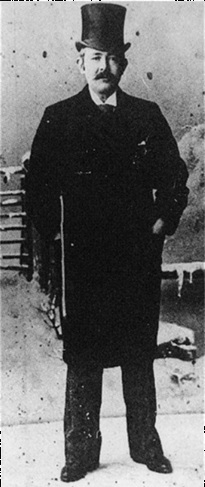
Architect of the former School of Arts building (now Gympie Regional Gallery), Hugo Du Rietz. Year unknown.
Below is an article from Gympie Times about opening night:
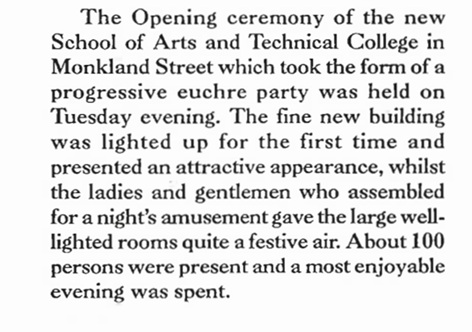
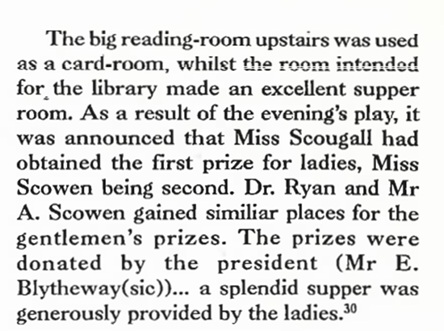
Gympie Times newspaper article, 28th of February 1905.
So by 1905, the School of Arts had their own building. In this year, they offered classes such as model and perspective drawing, water colour painting, dressmaking, book-keeping, shorthand, typewriting, carpentry, geology and theory of music (Webb & Pechey, 1995). The carpentry class did not last though, due to a lack of support. By the end of 1905, there were 4175 books in the School of Arts library and over 215 members/ subscribers to the School of Arts (Webb & Pechey, 1995).
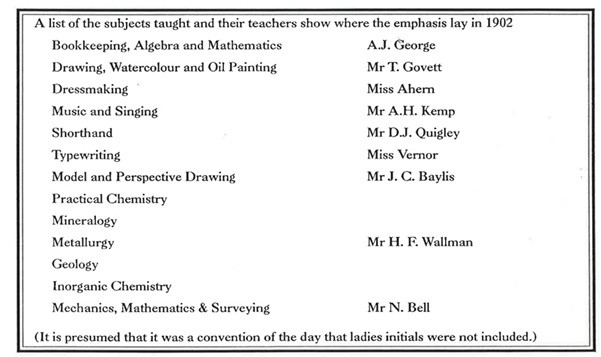
List of subjects taught at the School of Arts and the teachers, 1902. Excerpt from: Webb & Pechey, 1995.
By 1906, the School of Mines closed down and so they stopped operating classes within the School of Arts (Webb & Pechey, 1995). On top of this, over the four years that followed, the number of subscribers started to decline. Adding to the School of Arts Committee’s struggles, there was also a mysterious magazine thief active throughout 1907, whom they could not locate (Webb & Pechey, 1995).
Between the years of 1909 and 1914, the School of Arts continued to operate with a relatively small number of subscribers. Between 1914 and 1918, however, with the First World War raging, the School of Arts had to struggle even harder. (Webb & Pechey, 1995).
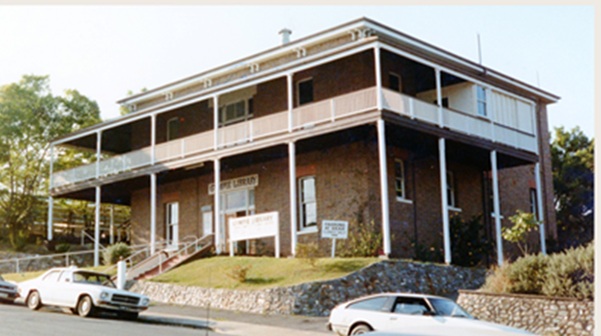
School of Arts and Library building, 1982.
After the First World War, the focus of the School of Arts shifted towards the library, although the technical classes were still running in the background. The 1920s were the years of the depression, which meant that the School of Arts struggled once more in its quest for subscriptions (Webb & Pechey, 1995). In 1926, at the Annual General Meeting it was decided that they would host a concert and lecture to help raise funds. This was not as successful as they hoped it would be, with the lecture raising just over 1 Australian pound! Times were certainly tough back then!
To raise money, the upstairs reading room was converted into a flat for rent in 1941. The School of Arts unfortunately saw further decline into the 1970s when TAFE started offering classes for adults. By 1975, there was support from the government for a free library system. Thirty thousand dollars was granted to help refurbish the building. At the end of 1975, the School of Arts Trustees resigned, and the administration of the library was taken over by Cooloola Shire Council (Webb & Pechey, 1995).
In 1995, the library moved to the new premises on Mellor Street.
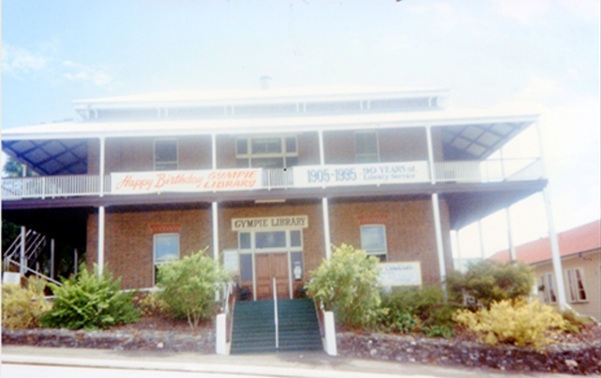
School of Arts and Library building, 1995.
In 1998, Cooloola Shire Council opened a gallery in the School of Arts building and appointed Joolie Gibbs as the co-ordinator. The building was air-conditioned, and its interior was modified to make a gallery space and an office. In 2002, with funding from Cooloola Shire Council and the Queensland Millenium Arts Fund, the Gympie Building Company constructed an annexe, named after Gympie’s Australian Prime Minister, Andrew Fisher (Gympie Regional Gallery, 2025). Taking care not to compromise the integrity and fabric of the Du Rietz building, architect Richard Muhling designed a light, modern, yet complimentary structure, containing storage spaces, a lift, toilets and a workshop.
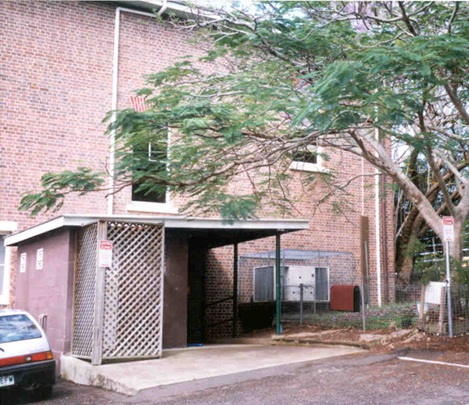
Before the Andrew Fisher Annexe and Gallery upgrade, 2002.
At the same time, the Du Rietz building was modified to provide three display areas — the Gympie Times Exhibition Space, the Hugo Du Rietz Gallery and Gallery Three — with a meeting room named after Edward Bytheway.
The extended Cooloola Shire Public Gallery was opened on 28 February 2003. In 2004, it was awarded a Regional Commendation by the Royal Australian Institute of Architects. Classified as a Category A gallery, it houses national, regional and local exhibitions and heritage displays (Gympie Regional Gallery, 2025).
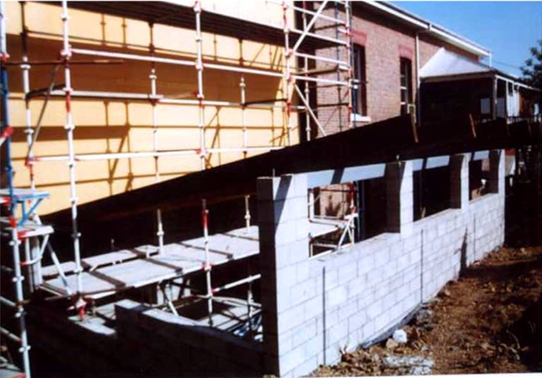
During the Andrew Fisher Annexe and Gallery upgrade, 2002.
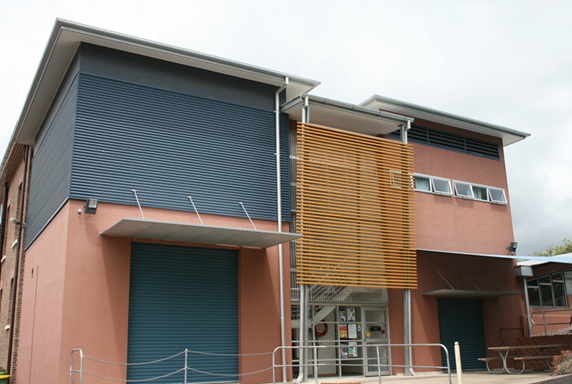
After the Andrew Fisher Annexe and Gallery upgrade. Officially opened on the 28th of February 2003.
Having financially survived two world wars and a depression, the School of Arts has certainly claimed its place as a resilient and much needed community service that has been a hub of education and culture for 120 years.
References:
Atkinson, L. (2018). Hugo du Rietz: Swedish noble, architect, farmer and a founding father of Gympie.
Gympie Regional Gallery (2025). Interview and information provided by staff.
Webb, R., & Pechey, S. (1995). Gympie School of arts and library: 90 years of service, 1905-1995. Gympie Regional Council.
Photographs:
Gympie Library Historical Photograph collection and Gympie Regional Gallery Photograph collection.
Published on 13th May 2026.

